Provenance
On the history and character of the Bristol Channel pilot cutter, and the tradition from which we take our name.
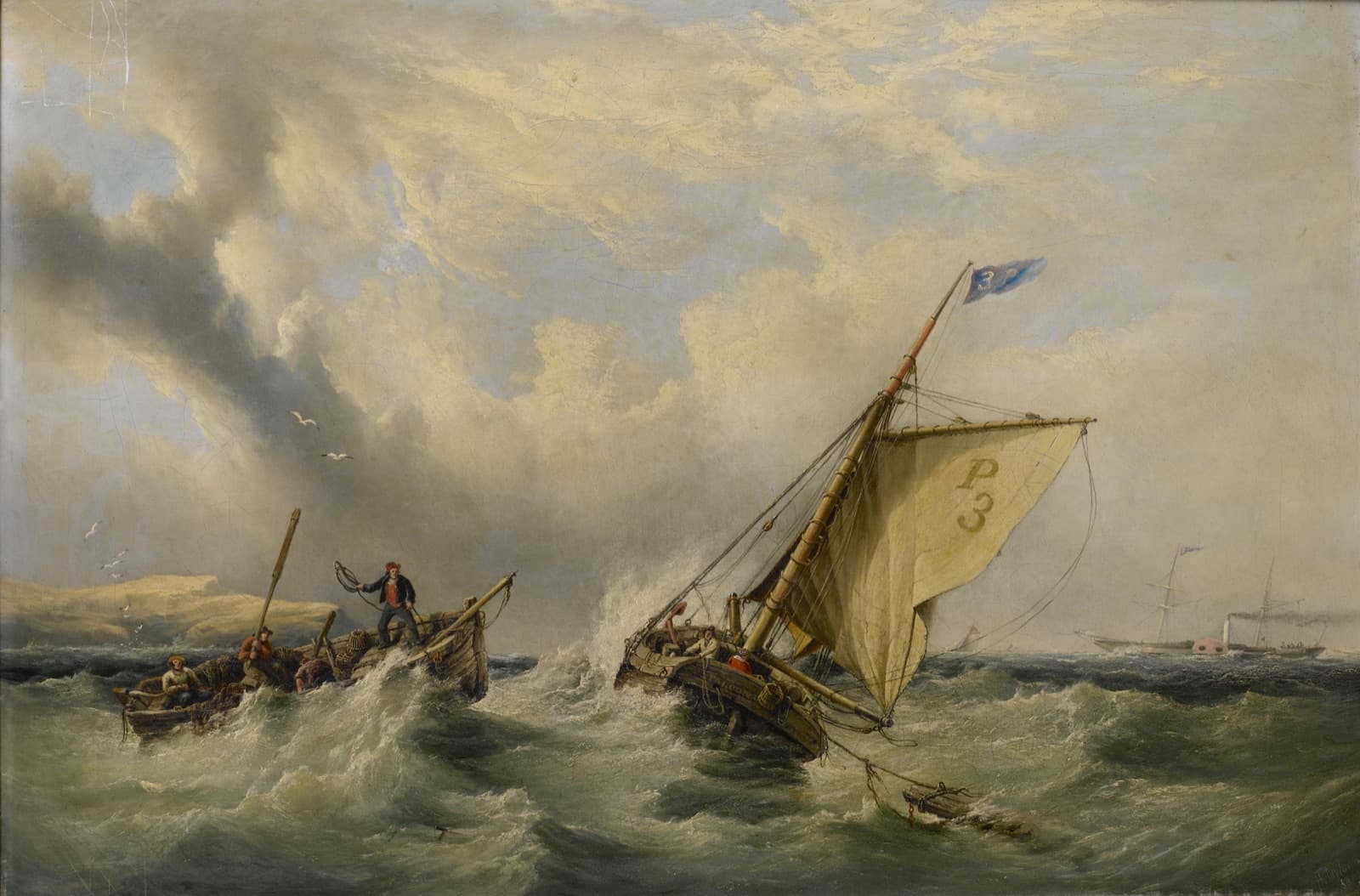
Henry King Taylor, "Pilot Cutter No. 3 with a Rowing Boat Coming Alongside"
The Bristol Channel presents some of the most challenging navigational conditions in British waters. Its tidal range—the second highest in the world—creates powerful currents and constantly shifting sandbars. The channel's funnel shape accelerates weather from the Atlantic, producing sudden gales and reduced visibility. For centuries, this was the gateway to Bristol, one of England's most important ports.
Ships approaching Bristol required pilots—men with intimate knowledge of the channel's hazards, who could guide vessels safely through waters no chart could fully describe. These pilots operated independently, competing for incoming ships. The first to reach a vessel won the commission.
The Cutters
This competition drove the evolution of a remarkable vessel: the Bristol Channel pilot cutter. These boats needed to be fast enough to reach ships first, seaworthy enough to operate in the channel's notorious conditions, and—crucially—manageable by a crew of just two: the skipper and an apprentice. When a pilot boarded an incoming ship, his apprentice sailed the cutter home alone.
The resulting design was refined over generations. Deep hulls for stability. Gaff rigs for power and flexibility. Long bowsprits with multiple headsails for speed. The cutters were painted black to the waterline, their punts white for visibility at night. Sails were cotton in summer for lightness, flax in winter for durability.
Names like Alpha, Doris, Marguerite, and Mascotte became known throughout the maritime world. These vessels represented the pinnacle of working sail—purpose-built, continuously improved, operated by men whose livelihoods depended on their performance.
The Pilots
The pilots themselves were professionals of a particular kind. Their knowledge was specialized and hard-won—years of apprenticeship learning the channel's moods, its hidden banks, the way weather changed around Lundy Island. This knowledge could not be easily transferred; it lived in experience and judgment, not charts and tables.
A ship's captain, however capable in open water, recognized his limitations in unfamiliar territory. The pilot's value lay precisely in knowing what the captain could not know: where the channel had shifted since last season, how the current ran at this particular state of tide, which approach would serve in the present conditions.
The relationship was one of trust. The captain surrendered control of his vessel—his cargo, his crew, his reputation—to a man he might never have met. The pilot assumed responsibility for bringing them safely through.
The Tradition
Steam and then diesel ended the age of the working pilot cutter. By the early twentieth century, the great cutters were sold off or converted to yachts. But the tradition they represented—the combination of specialized knowledge, operational capability, and professional discretion—remains valuable wherever skilled navigation through difficult waters is required.
We take our name from that tradition, and we take its virtues as our model.